From Technologyto Capability

We've been to war. We know the workshop, the mud and the ops room, as engineers, operators and policymakers, and we've built businesses since.

Critically, we were the customer on the front line.

Now we tell you what stands between your technology and a fielded capability.

Read more

We help pioneering technologies and products become fielded military capabilities.

A technology that works is not a capability. Capability is proof against doctrine, organization, training, infrastructure, and the conditions of actual use.

That proof is what buyers are really assessing, and where most defence and dual-use companies find out too late that they don't have it. We get you there first.

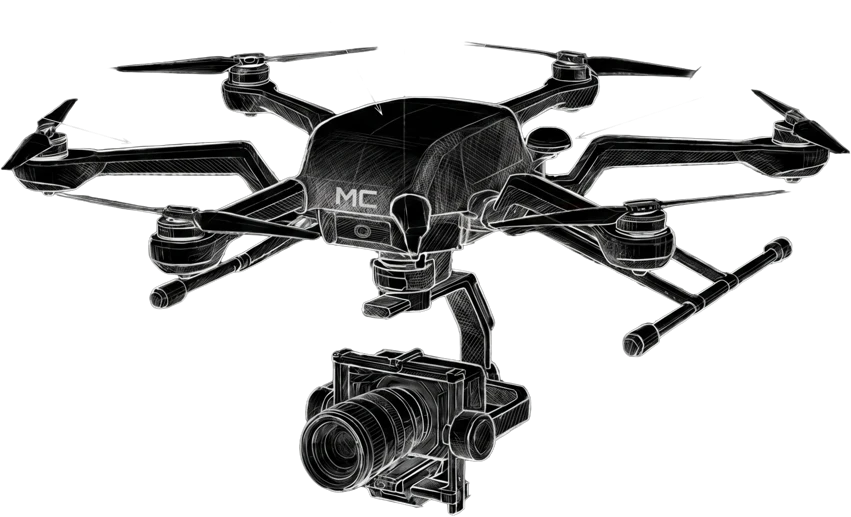
Technical line-art sketch of an uncrewed aerial system with a gimballed camera payload

The operational concepts, tactics, and standard procedures that define how forces conduct missions and employ equipment.

The command hierarchies, unit sizes, and team structures responsible for operating and managing the capability.

The instructional materials, courses, and simulators needed to build operator and maintainer proficiency.

The core technology itself, along with all supporting hardware, software, spare parts, and diagnostic tools.

The higher-level knowledge and strategic understanding required by decision-makers to effectively employ the technology.

The human workforce, including the skill levels, staffing numbers, and physical requirements needed to support the system.

The physical real estate, utility infrastructure, storage space, and maintenance sites required to house and sustain the capability.

The technological and procedural standards that enable the system to connect, exchange data, and operate with other systems and forces.

Our Purpose & What We Do

Four questions determine whether defence technology reaches the people who depend on it: whether it works for the user, whether it can sustain a business, which market to enter first, and whether it merits investment. We help companies and investors answer them on the evidence.

Every engagement rests on two disciplines: operator judgment, applied by people who have operated, fielded and maintained military equipment, and evidence grading, so that each finding states how well it is supported.

Engagements run as defined projects or embedded, with a partner working inside your team.

01

Capability Advisory

From a working product to a well-positioned military capability.

A product that performs well is not yet a capability. Defence buyers assess whether it serves their users in operational conditions, and whether it fits their doctrine, training, organization and support. We assess the product against those tests, define the requirement it addresses, identify what must change for it to be fielded, and design the trial that will demonstrate its mission fit. The trial is run by the company and its test partner, to a plan built so the results are credible to buyers and investors.

How we work

  1. 1Capability Baseline. An operator-led assessment of the product against the conditions of its intended use, with each finding graded by its evidence.
  2. 2Requirement. The capability need defined across DOTMLPF-I, showing what must be true beyond the product for a unit to field it.
  3. 3Gaps. The changes required, prioritized by their effect on mission fit and the evidence each will generate.
  4. 4Demonstration. A trial designed with measures and pass criteria, so its results become graded evidence.
Typically engaged when
A defence customer has shown interest, and the fit between product and requirement has not yet been established.
Outputs
The Capability Baseline; a capability plan aligned to the requirement; a trial and evaluation plan with defined pass criteria.
Scope
Advisory only. We do not undertake product engineering or hold technical data.
02

Commercialization Strategy

From deep technology to a sustainable business.

Technology that works in development still requires a business model, a market and a route to revenue. We help companies decide what to offer and to whom: product or licence; defence, dual-use or civil markets; and the most promising first market. We then set out the plan to reach it: the three to five strongest routes to revenue, the channels and funding programmes behind each, the partnerships required, and the evidence investors will expect. Where a company is raising capital, we work alongside its capital-markets adviser, not in place of one.

How we work

  1. 1Capability Baseline. The technology's readiness and the evidence behind its claims, graded on the same standard as our capability work.
  2. 2Options. What to offer and to whom, each tested against how that buyer actually acquires and pays.
  3. 3Routes. The three to five strongest routes to revenue, ranked on the factors that decide whether each can be won and sustained.
  4. 4Plan. Channels, funding programmes, partnerships and the evidence investors will expect, sequenced against the company's runway.
Typically engaged when
A company has several possible markets and needs a clear basis for choosing among them.
Outputs
The Capability Baseline; a commercialization decision; ranked routes to revenue; a commercial plan.
Scope
We do not raise capital or make investor introductions.
03

Market Entry Planning

The right geographies and verticals, and the optimal routes into them.

Each Allied nation acquires capability through different mechanisms and on different timelines. We help companies select a first market and the adoption route suited to it, whether an innovation programme, an urgent operational requirement, rapid acquisition or standard procurement. We then prepare the company to pursue it: the requirement, the buyers and sponsors involved, the partners needed, and the sequencing. Dual-use and civil routes are treated as legitimate outcomes in their own right.

How we work

  1. 1Readiness. Whether the capability case is strong enough for the buyers in view, judged on the evidence (a Capability Baseline if one is not already in place).
  2. 2Selection. Allied markets compared on how each acquires capability, where the requirement sits, and what entry demands of a company at this stage.
  3. 3Route. The adoption mechanism, sponsors, partners and sequence suited to the chosen market.
  4. 4Preparation. The company readied for the requirement, the buyers and the timeline it will face.
Typically engaged when
A company has a credible capability and must decide where and how to pursue its first defence sale.
Outputs
A market and route plan, with sequencing and a readiness assessment.
Scope
Planning and preparation. We do not lobby or arrange meetings with officials on a client's behalf.
04

Independent Capability Assessment

An independent view of mission readiness, before capital is committed.

Investors, lenders and acquirers evaluating defence and dual-use companies need to understand whether the capability claims will hold under operational scrutiny. We provide an independent, operator-led assessment that concludes in a graded verdict, with each finding graded by the strength of its evidence and a clear statement of what would change the verdict. The assessment is built on our Operational Pressure Test and reported in the terms defence buyers use.

How we work

  1. 1Scenario. The operational conditions the claims must hold under, defined before any finding is made.
  2. 2Pressure test. Our Operational Pressure Test: an operator-led interrogation across eight lines of capability, with readiness triangulated across technology, integration and manufacturing.
  3. 3Structure. Adoptability (IP position, ownership, supply chain, and export-control exposure flagged for counsel) and the company's runway to see the process through.
  4. 4Verdict. A graded, three-level verdict, with every finding graded and an evidence plan stating what would change it.
Typically engaged when
A transaction depends materially on the target's capability claims.
Outputs
The Pressure Test Record; a graded verdict; an evidence plan.
Scope
This is not engineering due diligence or a legal or export-control opinion. Matters in those areas are flagged for the client's counsel.

Who We Work With

We work with people who need a credible, evidence-based answer before they commit capital, a cohort place, or engineering time to a defence application, or before they sign off on someone else's.

  • For Companies

    Founders taking deep technology to market, and companies turning a working product into a fielded defence or dual-use application, through defined projects or with a partner embedded in the team.

  • For Financial Sponsors

    Investors, lenders, and acquirers commissioning independent, evidence-graded assessment before an investment, credit, or acquisition decision.

  • For Institutions and Accelerators

    Institutions and accelerator/incubator programs adding specialized capacity during formal cohorts, and ongoing support to candidates afterward.

Focus

  • Autonomy & Uncrewed Vehicles
  • Extreme-Environment Technology
  • Littoral Operations
  • Soldier & Squad-Level Systems
  • Sustainment Operations (Logistics, Supply Chain, Maintenance/Engineering, Movement & Transportation, Medical)

Based in Vancouver, Canada. Working across Canada and NATO markets: an industry where trust and credibility are everything.

Who We Are

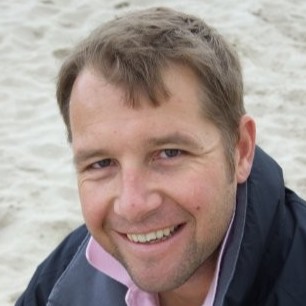
Mark Machin, Founding Partner at Machin Campbell Capability Partners

Mark Machin MBA, BEng (Hons)

Founding Partner

Mark Machin spent nine years as a British Army engineering officer, globally deployed, including Middle East conflict zones, the technical bridge between front-line operational requirements and OEM engineering teams across vehicle, armaments, sensor, robotics, and communications platforms, commanding 200+ personnel across three continents. He later advised Fortune 500 clients at McKinsey & Company, then built and led energy, infrastructure, and mining capital program advisory practices across Canada, the US, and Chile.

BEng (Hons) Mechanical Engineering, MBA. Incorporated Engineer. Dual UK/Canadian citizen. Based in Vancouver, Canada.

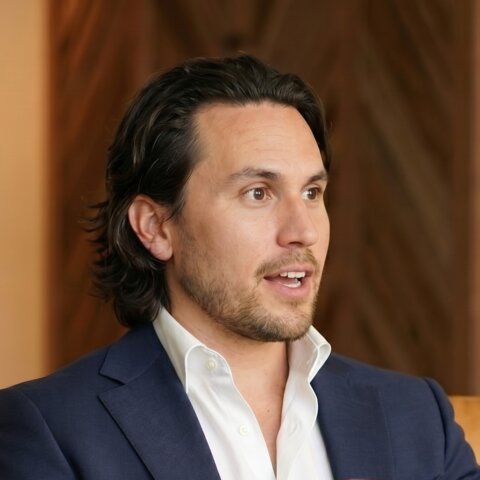
Ollie Campbell, Founding Partner at Machin Campbell Capability Partners

Ollie Campbell MC, MSc, CMgr

Founding Partner

Ollie Campbell spent seventeen years as a British Army infantry officer, commanding operations in Iraq and Afghanistan and awarded the Military Cross for gallantry. He went on to advise senior officials on geopolitical risk and multilateral defence policy as Senior Policy Adviser at the UK Mission to the United Nations, before leading governance and strategy at one of BC's largest regulators.

MSc Security Sector Management (MA International Affairs, King's College London, in progress). Dual British/Canadian citizen. Based in Vancouver, Canada.

Our Experience

The convergence of four lenses

The Convergence diagramFour overlapping circles: Operator, Technical, Strategic, and Investment & Commercial, converging at the center.OPERATORTECHNICALSTRATEGICINVESTMENT

Operator

Credibility, intuition, and perspective, having fielded, operated and maintained capabilities across multinational Allied contexts.

Technical

A systems engineering, technical translation, and commercialization lens.

Strategic

Experienced creating decision environments for senior leadership, including policy fluency and strategic risk assessment.

Investment & Commercial

Investment origination, venture-building, commercial strategy and investor narrative.

Start a Conversation

If you're turning technology into a capability, taking it to market, or deciding whether to back it, we'd like to hear about it.

Book a Callhello@machincampbell.com